
So Paul does not seem too vain (dk here)–and he is not–FYI the title was not chosen by him, but rather by his faithful servant, David Korn, Special Projects who has been with him from here day one, from eleven months ago. This is a major peace of work. I asked Paul: “Do you know the meaning of epic?” And he took a flier, being a serious movie buff as he is. If you think being 41st in all of Canada for chess is a joke, try beating 300 people and winning a hefty movie ticket raffle for best answers in current cinema trivia. But it was not to be. He missed. Instead: “Paul, epic is often a term in alpine mountaineering, when maybe you are not roped in near a summit, but you climb all day, up and up and up, then, when you get there and look out as far as the eye can see, you know you did something which you might not do for another ten years, if ever again” (Paul will).
Without further ado, here the transcription of his his Epic Interview with Leehi Yona,of Dartmouth University [1]. Not only did she do a great job, but Paul bested by editing for correctness, additions, and making minor clarifications, and it REALLY shows. He also took great care in adding images. You will love this. The more we look at it, the more impressed we are at his reach, depth, and power. Gassho sir Paul! Previously his big step was ‘Paul 4.0‘. Now we have Paul 5.0:
———- ———-
For full interview, click: Interview with Leehi Yona. Click 5052_LY_Interview Thirty-One_Paul Beckwith_02_23_16 edited final, and here for cloud version. 13,324 words, 26 pages in 12 pnt. Here is a clip:
Interview with Leehi Yona:
Interviewer (INT): Leehi Yona (Dartmouth University)
Responder (R): Paul Beckwith (University of Ottawa)
Date: February 23, 2016. Transcribed by Leehi Yona, Light edits by Paul Beckwith for grammar, spelling, clarifications, readability (no significant content edits). Images added by Paul Beckwith and David Korn for blog.
———- ———-
INT: So if you could please start just by telling me your name and what you do.
R: Paul Beckwith. I’m a part-time professor at the University of Ottawa in the Department of Geography, Laboratory for Interactive Research on Environmental Change and Public Policy (previously Laboratory for Paleoclimatology and Climatology). I’ve taught six courses, mostly introductory climatology and meteorology (3 times), and designed and taught an oceanography course. The climatology courses are second year courses, the oceanography is a third year. I also teach a third year course called Geographical Approaches to Environmental Issues and I’m teaching that at the moment (February, 2016) and have taught it in the past. So I design and teach lots of courses.
I’m also a Ph.D. student myself at the university. My research area is abrupt climate system change in the past and present. My background: I’ve come back to school, since I’m very concerned about climate change. I studied Engineering Physics before and got an engineering degree years ago, and also studied laser physics/optics and did a Master’s degree (M.Sc.) in the science faculty years ago. I do lots of videos on climate change. I have a website at http://paulbeckwith.net. I think I’ve done well over 100 videos and lots of blogs and interviews and things and I’m very active on social media (YouTube, Facebook, Twitter, etc.) to educate people on the risks of climate change, more specifically on abrupt climate change.
INT: What brought you into this work?
R: I’ve always been interested and concerned about what’s happening to our climate and weather patterns and decided that I may as well go back to school and learn it in a formal setting and study it intensely, to become an expert on what’s happening with our climate change system.
INT: So in your work on climate change, have you seen changes in public awareness on the issue?
R: For the most part, the overall public is not aware of the great risks that we face present day and in the near term, like in the next few years, say five years. I think too many of the public thought that climate change was a year 2100 problem and now they’re slowly realizing that it’s not. So I have seen a shift. I’ve seen a shift from denial and not knowing too much about it, and not caring about it, and not thinking it would be a part of their lives, to realizing that it’s happening now, but the understanding of the risks are still not there now.

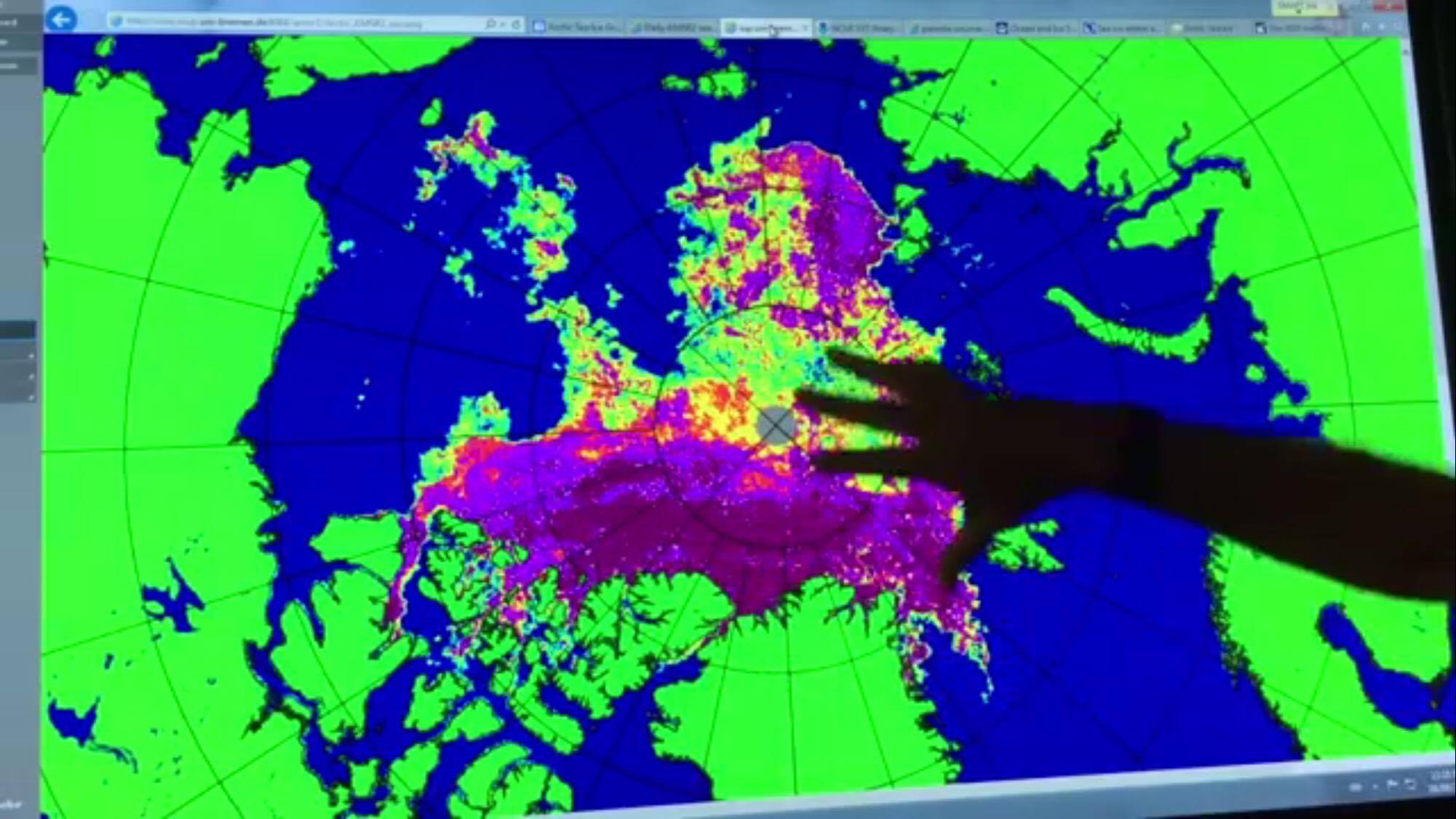
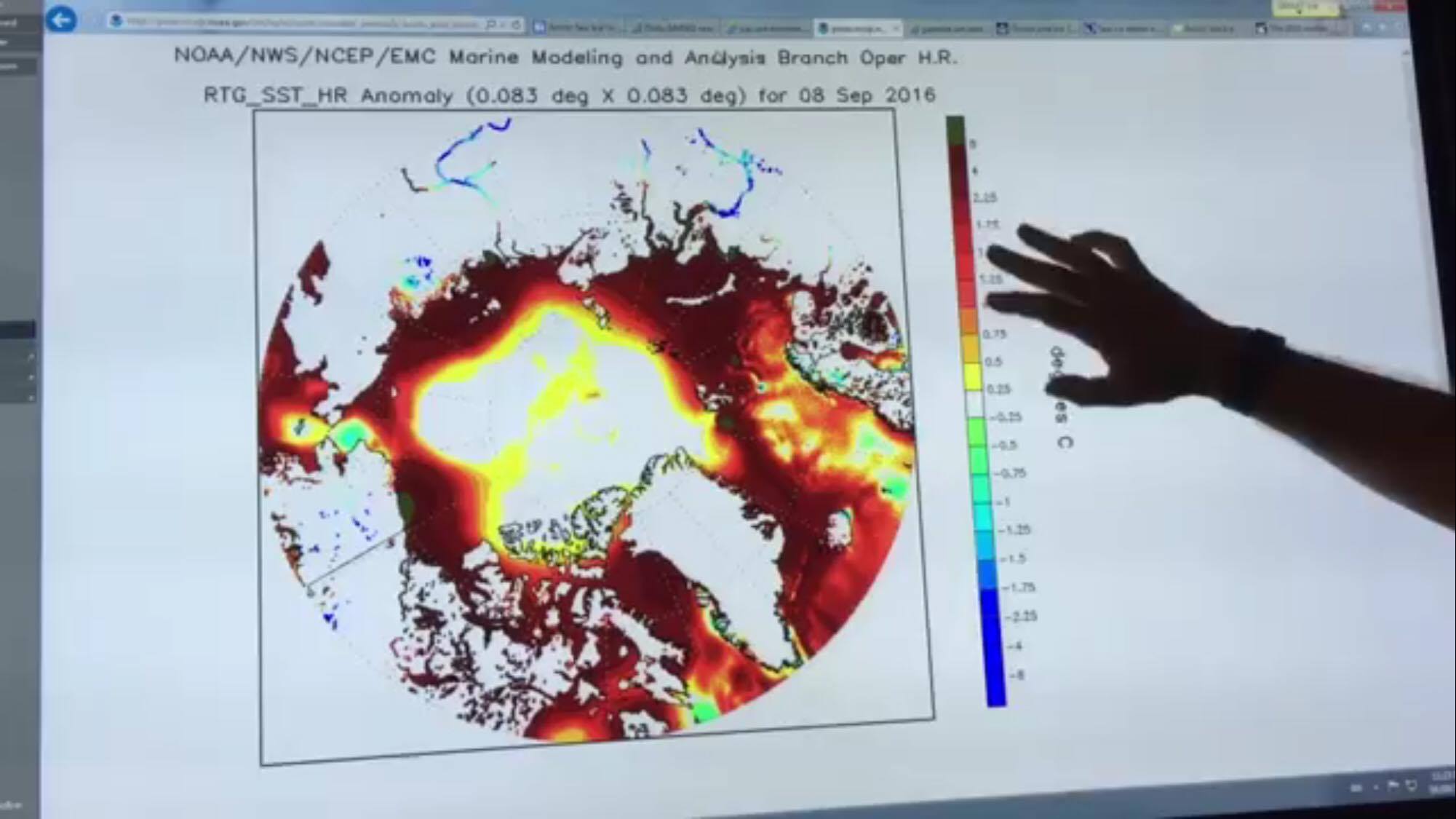
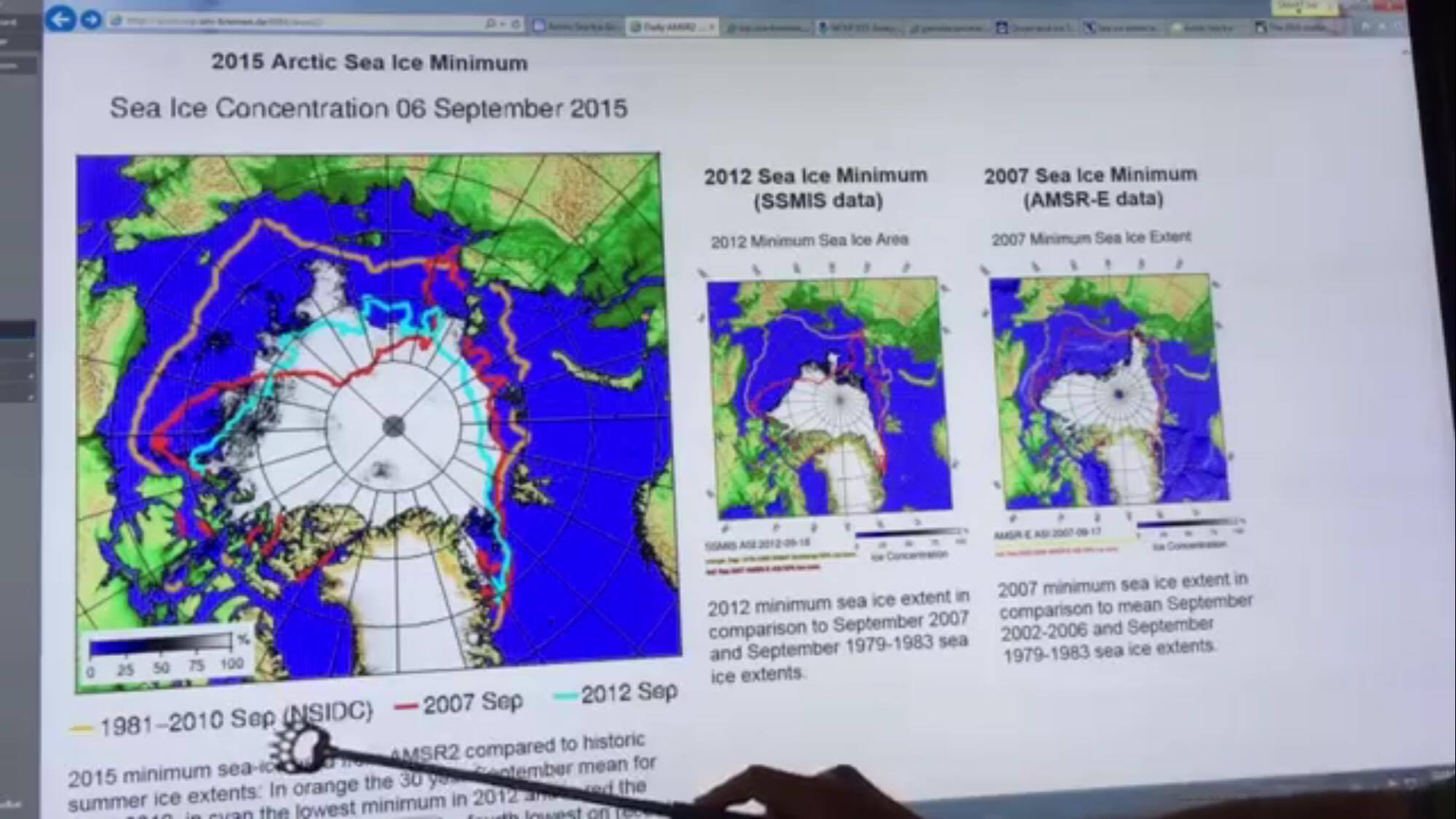
I think that very soon, we will lose the Arctic sea ice. We’ll have a “blue ocean event” (what I call it) and then the global extreme weather events that we see now, which are a manifestation of the latitudinal warming gradient, the greatly warming Arctic, will increase in severity, frequency and duration. They’re going to hit people’s wallets and security, and entire lives — well, they can hit the food supply for one thing, but it will also have a big impact on — I mean, it’s already having a big impact on the bottom line, the dollar, with the damage to infrastructure, flooding of cities, torrential rain events, the weather weirding and whiplashing, around weather variability and statistics in general.
So I think people will go from this state of thinking it was a long-term problem they didn’t have to worry about to thinking: “Hey, it’s happening now” to being utterly terrified about what’s happening and where we’re at. I think we’ll get an abrupt tipping point in human understanding of the problem.
INT: And you think that the human understanding is then just tied directly to the weather events that people are noticing, right?
R: I think the actual extreme weather events that are occurring today are sort of taking people by surprise. People tend to have a lot of linear thinking. They think that slow changes are happening and will continue to happen over time, but they don’t recognize the instability; the inherent instability in the climate system and we’ve been fortunate to be in a stable state for a long period of time. People just assume that’s going to continue, and yet, we’re crossing tipping points, especially in the Arctic. So I think people are going to get a number of progressively worse wake up calls, and I think that’s going to come very soon, when we have no ice in the Arctic. No ice and snow in the Arctic…
Complete Interview with Leehi Yona continues here (above is pages one and two of full 26 pages).
———- ———-

[1] ‘Yona is doing her senior fellowship project on Arctic climate policy, and traveled to Alaska with funding from a’ Stamps Leadership Scholar Award.




 Paul Beckwith, Climate System Scientist